
nearbycoder.com is Josh Hamilton’s personal site, and this repository is its source, including this page. It holds articles, projects, games, a weekly build log started after a layoff, and postmortems. The site is laid out as a building: three floors called Read, Workshop and About, with the home page as the lobby.
Today it’s a static Astro 7 site with Tailwind CSS 4, deployed on Vercel. The repository dates from March 2021, and the site has been rebuilt several times since: it ran on Gatsby, then Next.js, and since February 2026, Astro.
The Nearby Building
The current theme, from November 2026, treats the site as an Art Deco tower in Tulsa, Oklahoma, borrowing from the city’s Deco architecture and from Route 66. The light theme is daylight on a limestone facade, with terracotta, jade and gilt on warm paper. The dark theme is the same building at night, with its neon lit: a midnight indigo sky, rose and teal neon, and bulb gold.
Each section is a floor with its own color. Read is terracotta (rose at night), Workshop is jade (teal at night), and About is brass. An elevator dial in the header points at the floor you’re on, and the home page puts a dial above each of its three elevator doors.

The fonts are self-hosted through Fontsource: Big Shoulders Display for the tall signage headings, Newsreader for reading, Jost for the interface, Limelight for the wordmark and plate numbers, and JetBrains Mono for code. The ornament is CSS: sunburst rays made with repeating conic gradients, plates with stepped setback corners, double gilt rules, triple speed lines and octagonal medallions.
A few pieces carry the theme. By day the hero headline is inlaid with streamline stripes, and at night it’s a neon sign that flickers on once. The latest article is “Now showing” on a theater marquee whose bulbs chase. The work history is a setback tower with one floor per job, a spire and a blinking beacon, and the footer is the lobby’s directory board. All of the motion turns off when reduced motion is preferred.
What’s inside
The content lives in Astro content collections: articles, projects, games, the layoff log and postmortems, each a folder of Markdown files with a typed schema. Projects and games share one shape, and games add a genre, platforms and an engine. Two data modules hold the site’s navigation and work timeline, and the /uses page.
Around that, the site has a command palette (Cmd+K or Ctrl+K), light, dark and system themes, RSS, a Lab of small interactive experiments, and technology pages that group projects by what they’re built with. A run of reading features landed in September 2026: reading paths, full-text search with excerpts, a topic directory, private reading lists and notes kept in the browser, a focus mode, a print edition, Markdown downloads and citations.

The desktop
/desktop is the building’s penthouse: an experimental browser desktop for exploring the same content. The shell is inspired by CachyOS and KDE Plasma, with a panel, an application launcher (Ctrl+Esc), desktop icons, and windows you can move, resize, snap to halves and quarters, and minimize. The Library is a file manager over everything on the site, and opening a file shows the real page in a reader window.
The launcher has 30 apps, from Notes, Tasks and a Markdown editor to a step sequencer, Sudoku, Reversi and Conway’s Game of Life. Workspaces adds up to eight virtual desktops, and Tile mode arranges windows in Niri-style scrolling columns built on Trellis panels. Layouts and app data are saved in the browser, with backups and restores in a Data Center app. There’s no account and no sync.

The Arcade has Memory, Bug Sweep (an 8×8 board hiding ten bugs), Snake, Pong and a 15 puzzle, plus DOOM: the original v1.9 shareware Episode One in js-dos 8.4.1, whose emulator loads from jsDelivr only after you press Play. There are two terminals. One is a pretend shell that never runs anything but knows a few jokes (try sudo make coffee). The other, Ghostty, is a real terminal built on Ghostty Web, a WebAssembly port of Ghostty’s engine, with tabs and split panes. Its panes connect over authenticated WebSockets to a separate bridge in services/terminal that runs real PTYs with node-pty. No bridge is configured by default, so you’d connect it to one you run yourself.
Each app loads only when it’s opened. Playwright tests hold the bundles to byte budgets: one each for the home page, an article and the desktop shell, and 24 KiB for each app.
Social cards
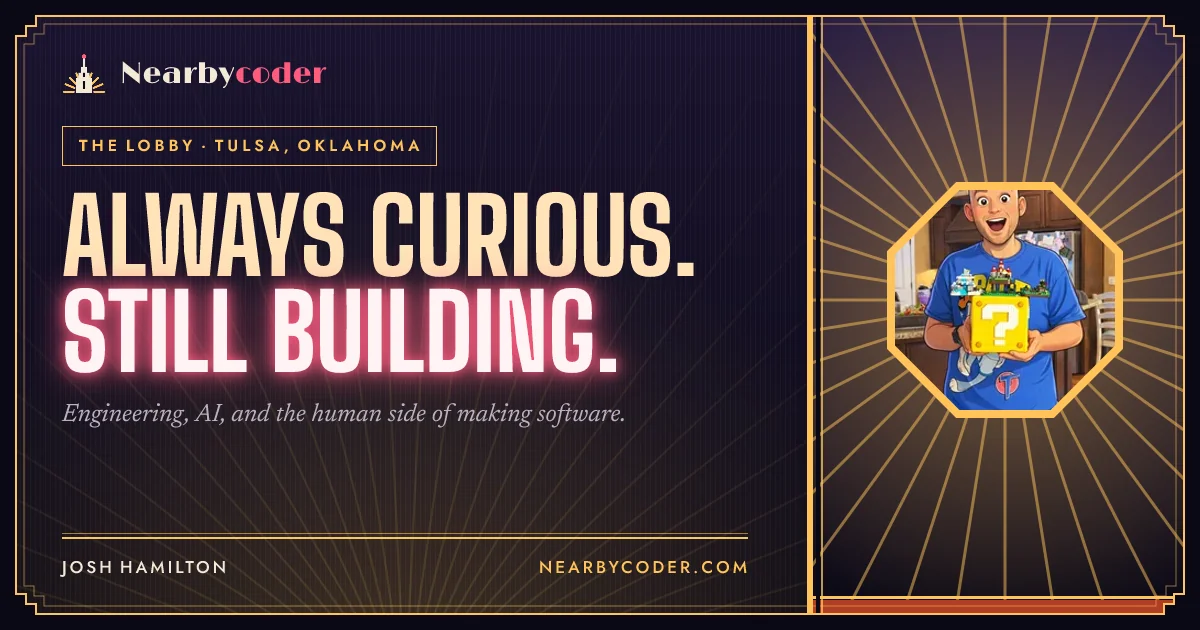
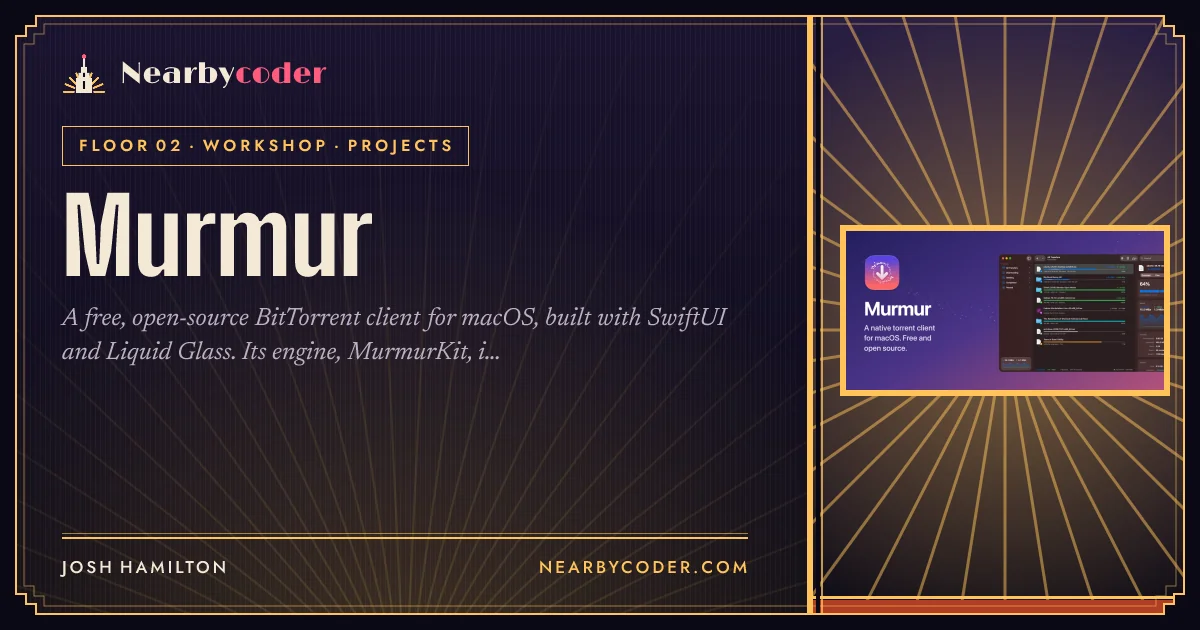
Every route gets a 1200 × 630 PNG social card at build time, made with astro-opengraph-images and a custom renderer. The renderer describes each card as React elements, which Satori turns into an image: the night edition of the building, with a midnight sky, a gold sunburst, a stepped gilt frame, the Limelight wordmark, a floor plaque and the title in Big Shoulders. The right panel holds an article’s art, a game’s screenshot, a project’s cover in a gilt vitrine, the portrait medallion on the home and About pages, or the tower. Cards render four pages at a time to keep build memory down, and sharp then palette-compresses them, about 70% smaller by the config’s own note.
Newsletter, media and tests
New posts go out by email. Three Vercel Functions in api/ run the newsletter on Resend: a signup that sends a confirmation email, a confirmation step that needs a click on the page (opening the link alone doesn’t subscribe anyone), and a daily cron at 14:00 UTC that sends up to three new posts. Videos aren’t deployed with the site. They’re served from a Cloudflare R2 bucket at media.nerb.dev.
npm run verify runs Astro’s type checks, a production build, and 70 Playwright spec files against the built site. They cover every route, the desktop and each of its apps, the games, the newsletter flow, axe accessibility checks in both themes, and the bundle budgets.
History
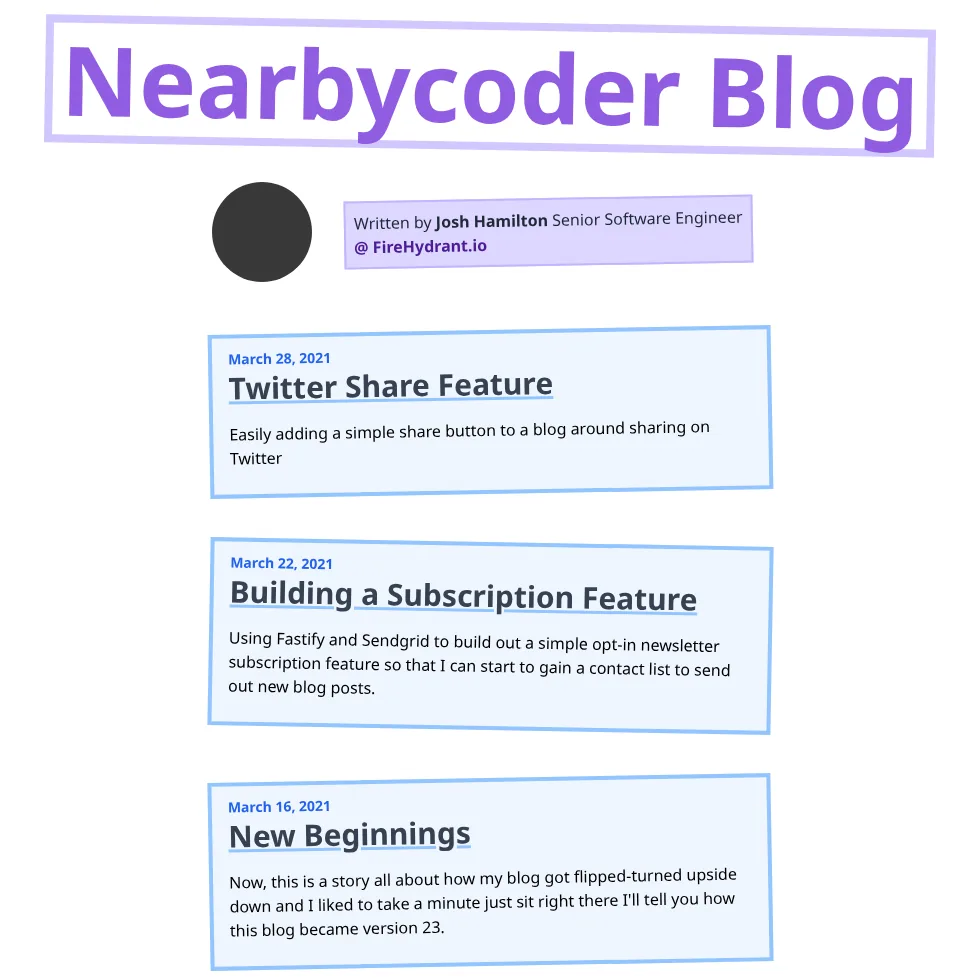
The repository was created on March 16, 2021, the date of the first post, “New Beginnings”. The Wayback Machine’s capture of nearbycoder.com from later that month shows that version: “Nearbycoder Blog”, generated by Gatsby 3.0.1, with a newsletter signup under the posts. Two of those posts, “Building a Subscription Feature” and “Twitter Share Feature”, are still on the site. The week before, two starters went up on GitHub unmodified: example-blog, Gatsby’s blog starter, and sanity-gatsby-blog, Sanity’s Gatsby blog template.
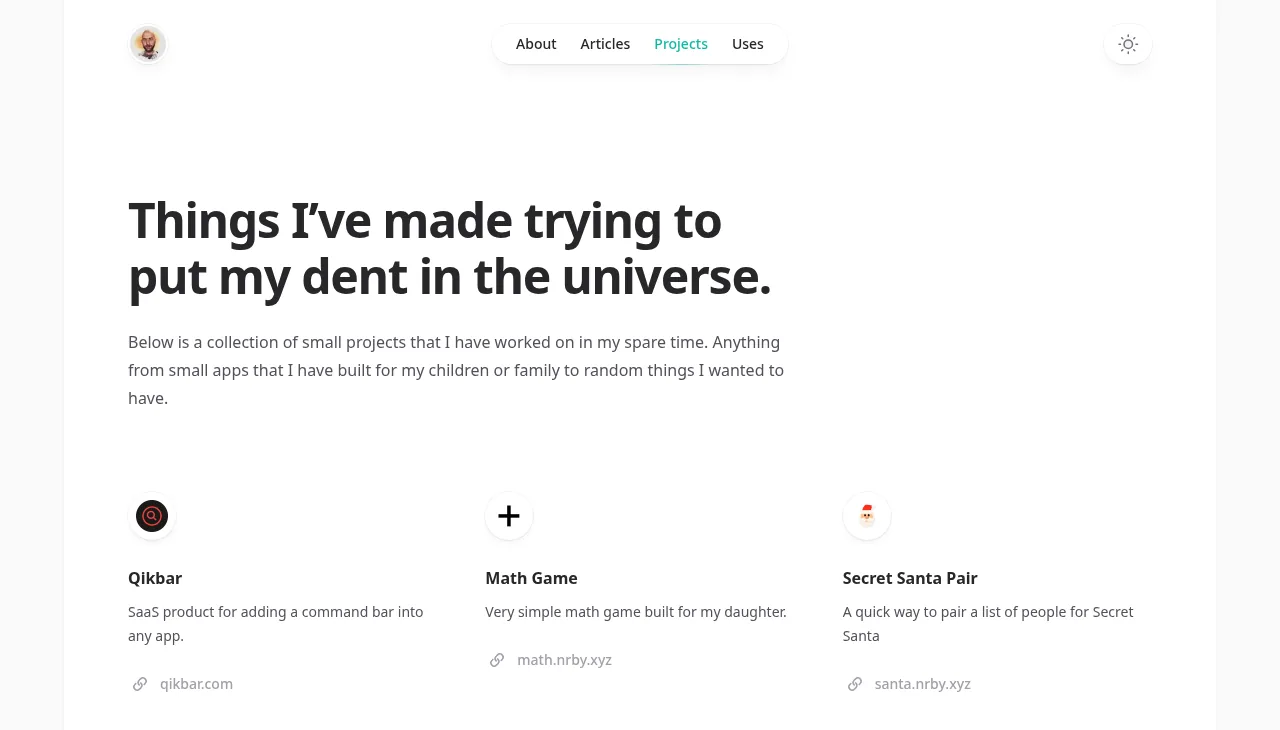
The early commits are no longer on any branch. The oldest one that can still be traced on GitHub is a fresh “initial commit” from November 28, 2022: a Next.js 13 site with React 18, Tailwind CSS 3 and MDX articles, started from a Tailwind UI template, with About, Articles, Projects, Speaking and Uses pages and an RSS feed. It gained a sitemap and, in January 2023, a command bar from Qikbar. Its last commit is from June 2024.
On February 1, 2026, a commit titled “redo” started over with Astro 5.17 and Tailwind CSS 4.1, carrying over seven articles and five projects, and the main branch begins there. The layoff log followed two weeks later. Since then the site has been redesigned six times: a brutalist look in April, a “signal archive” restyle and a riso print one in July, an editorial redesign in September, a topographic field survey at the end of September, and the Nearby Building in November. The desktop arrived in September and the Games section in October.
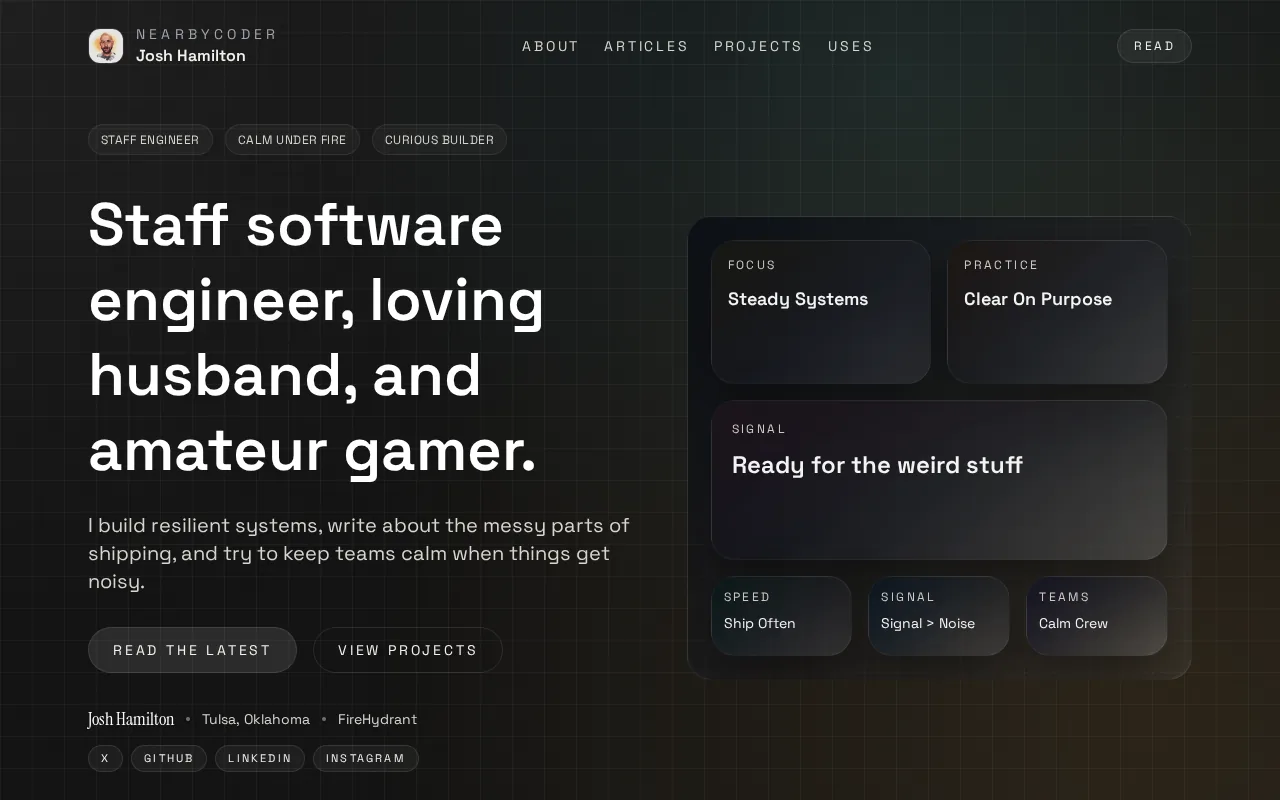
Other personal sites have their own pages: nearbycoder.tk, an AngularJS portfolio from 2015, and an Astro Blog starter deployed to GitHub Pages in 2024. jhamilton.design, a one-page Remix site from 2022, is another small site from the same years.
Running it
The site needs Node 24. npm install and npm run dev start the dev server on port 4321. npm run verify runs the checks, the build and the tests, after npx playwright install chromium. The README and the docs/ folder cover the theme, the desktop, the terminal bridge and the newsletter setup.
The creation date shown here is the GitHub repository’s UTC creation date. The current screenshots were captured from nearbycoder.com, the social cards were rendered with the site’s own card renderer, the March 2021 view comes from the Wayback Machine, and the 2024 and February 2026 views were captured by running those commits locally.