
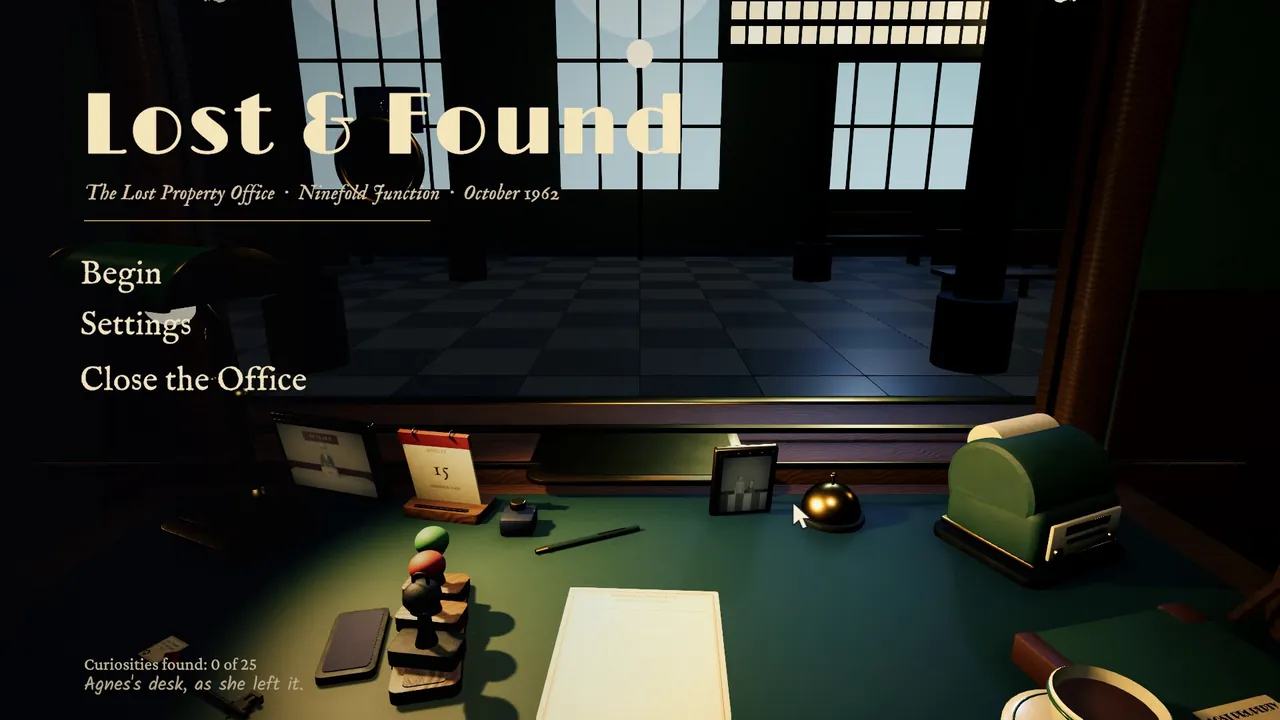
It’s October 1962 at Ninefold Junction, and you’ve just taken over the Lost Property desk from Agnes Pell, who ran it for forty-one years. Commuters come to the window to claim what they’ve lost. You search the drawers and shelves, turn each object over in your hands, find what’s hidden inside, and stamp the claim RETURN, REFUSE, or SEAL it in the Iron Drawer.
Some claimants are lying. Some things hum when their owner is near. Some things come from tomorrow. And some belongings should never be returned at all, especially not to the polite grey gentleman who keeps asking for the keys.
Looking closely is the whole game
There are no timers and no walls of text. Every case can be solved from what’s on the desk: the intake tag that says where and when the object was found, the details hidden in the object itself, the claimant’s story, and the rules Agnes left behind.
Pick something up and it comes to your hands under the lamp. Drag to turn it, scroll to lean in, and open its lid, latch, or clasp. A magnifier glints when you’re close to a hidden detail, such as a name strip inside an umbrella or a date stamped on the back of a photograph. Each discovery is written onto the claim slip, and clicking it asks the claimant a neutral question about it.
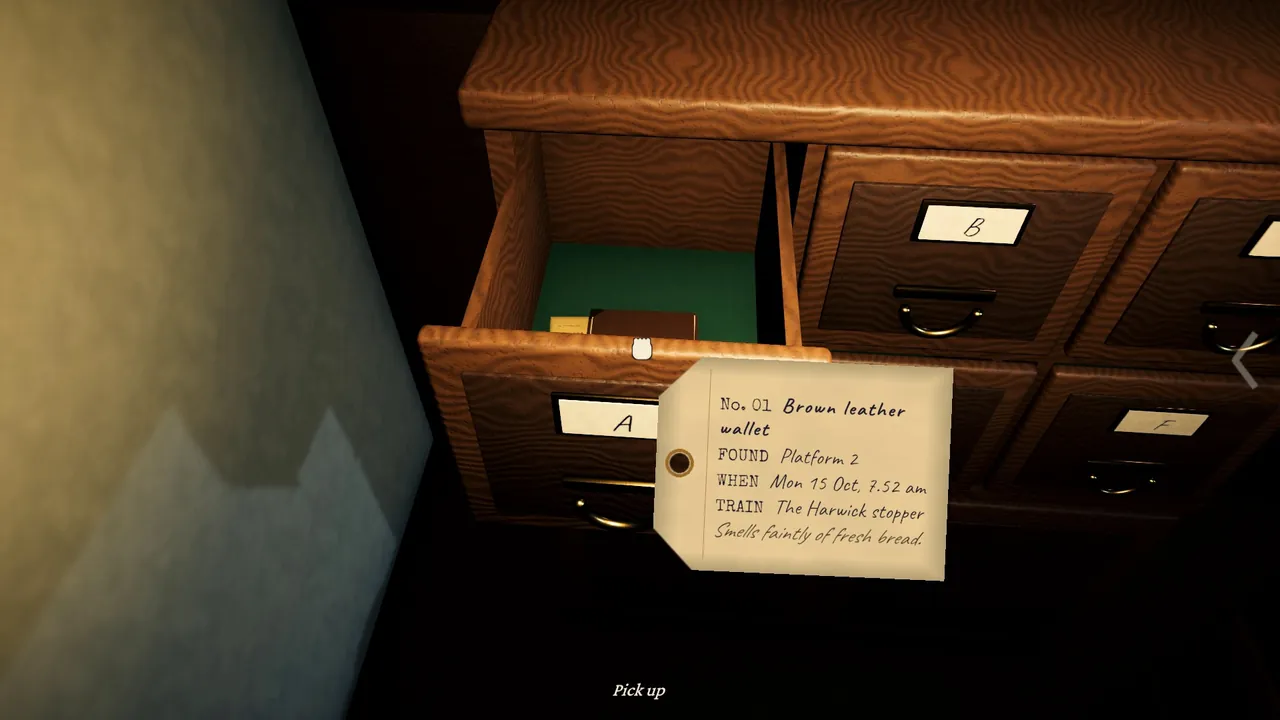
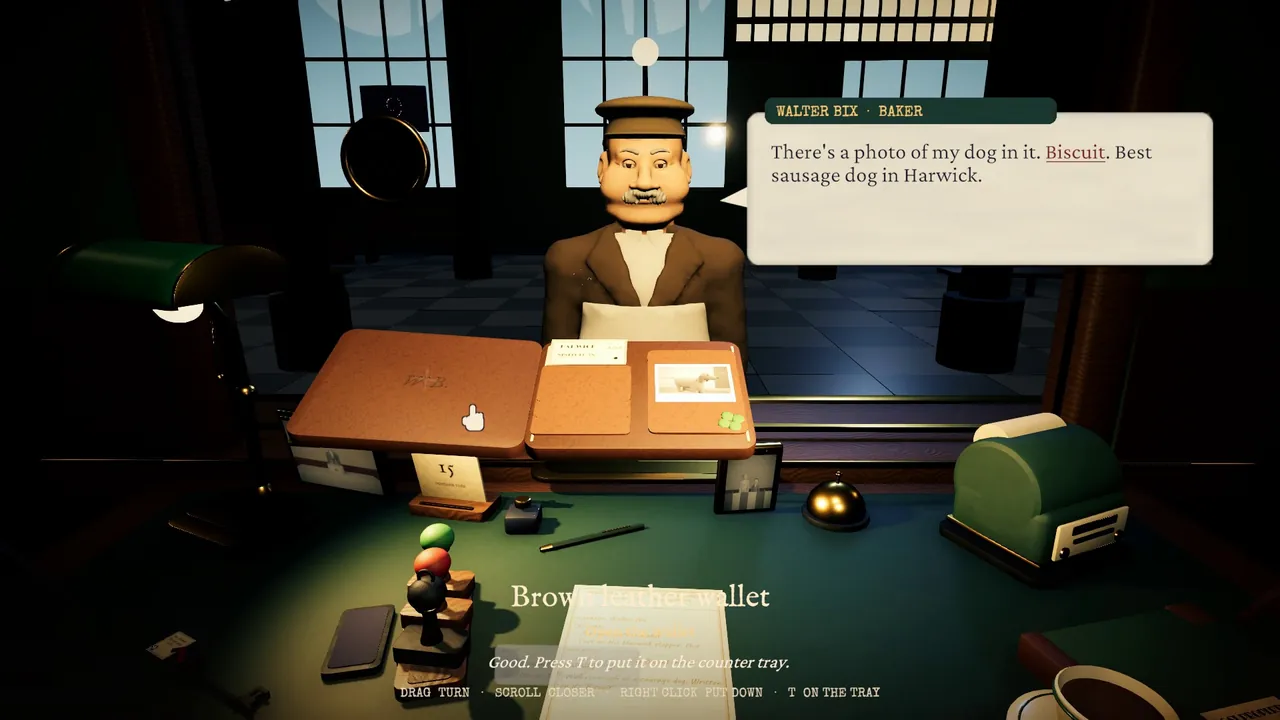
Honest owners know what’s inside. Liars only know what they could have seen from across the counter, so they bluff. The game never announces a contradiction; you compare, and the evening ledger tells you whether you were right.

The uncanny, gently
Things arrive from other times on Platform 9. A pocket watch found tomorrow runs backwards. A cold visitor frosts the window glass. From Thursday, Agnes’s lamp gains a blue filter that reveals hidden ink, and a ring in a velvet box turns up. Return it to the right person and every photograph on your desk changes. Mr Vell, the Grey Gentleman, knows every detail of every object, and nothing ever hums for him.
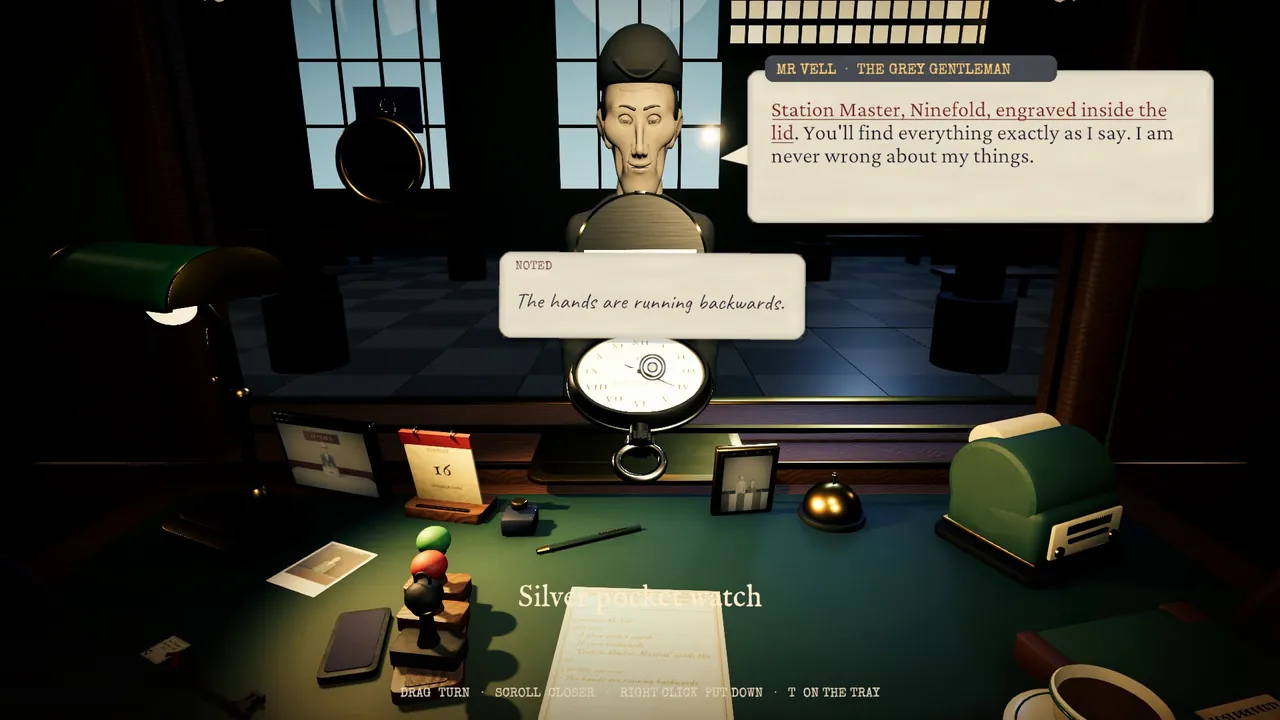
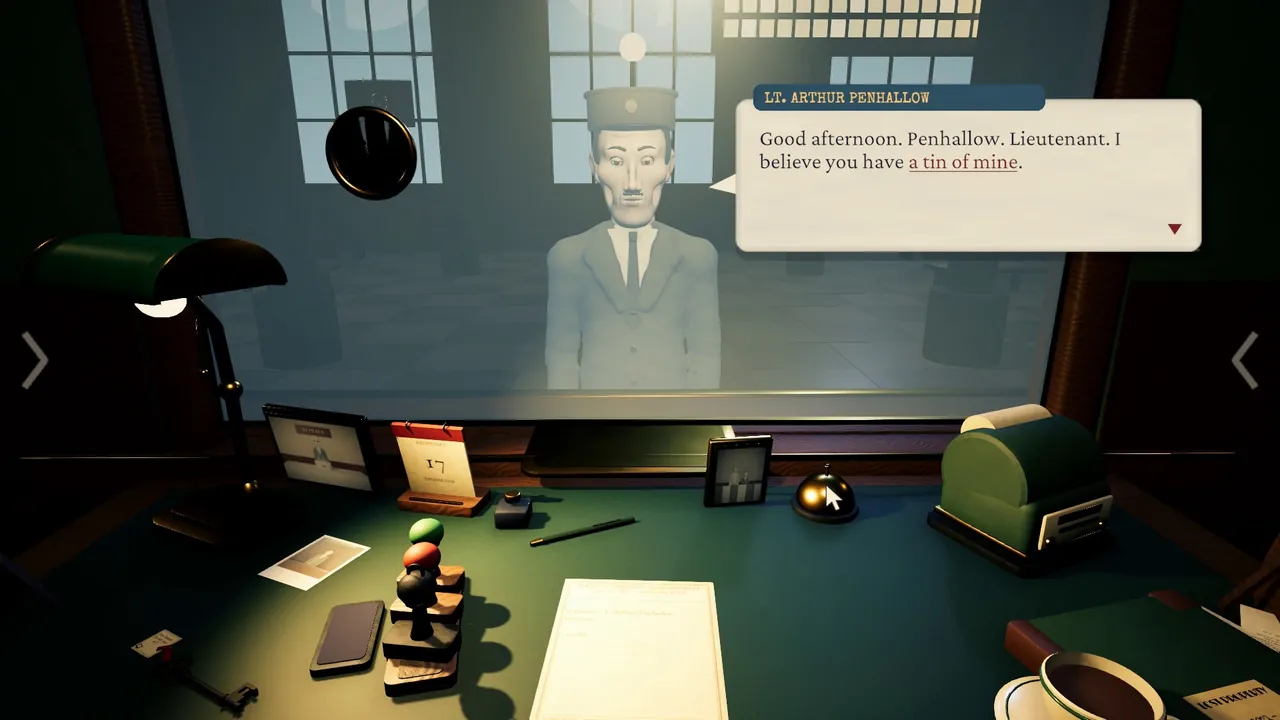
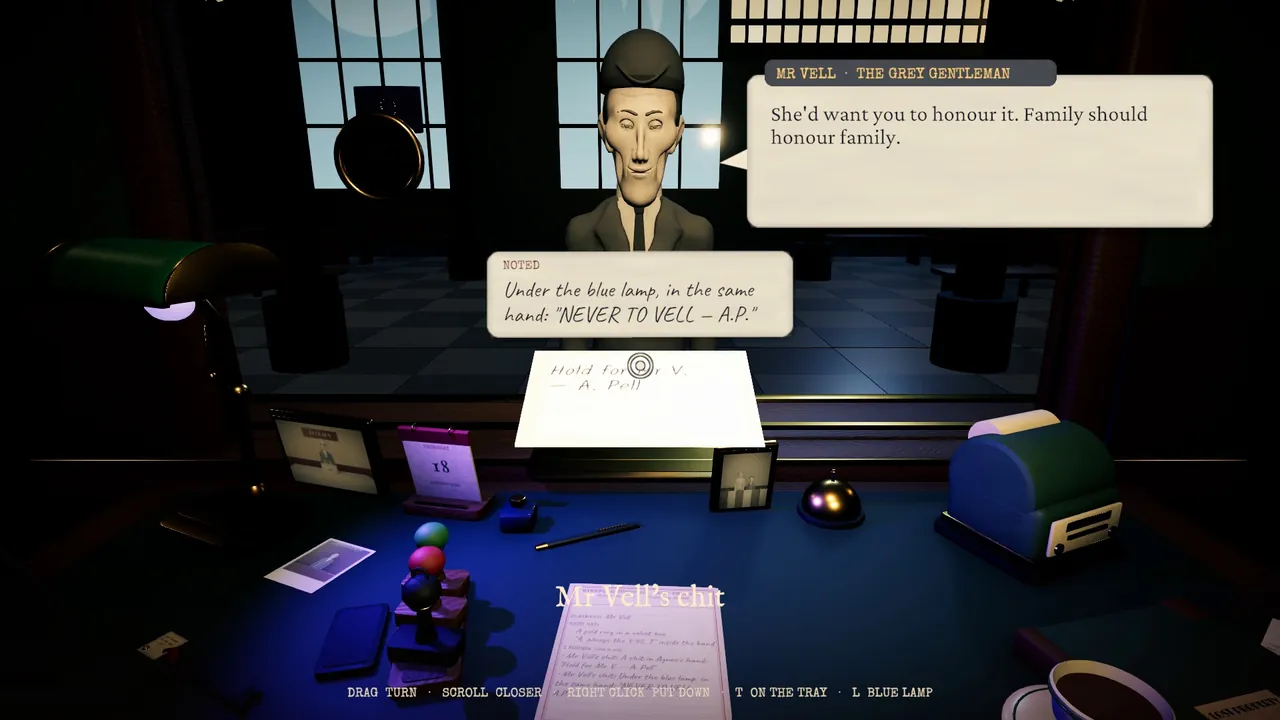
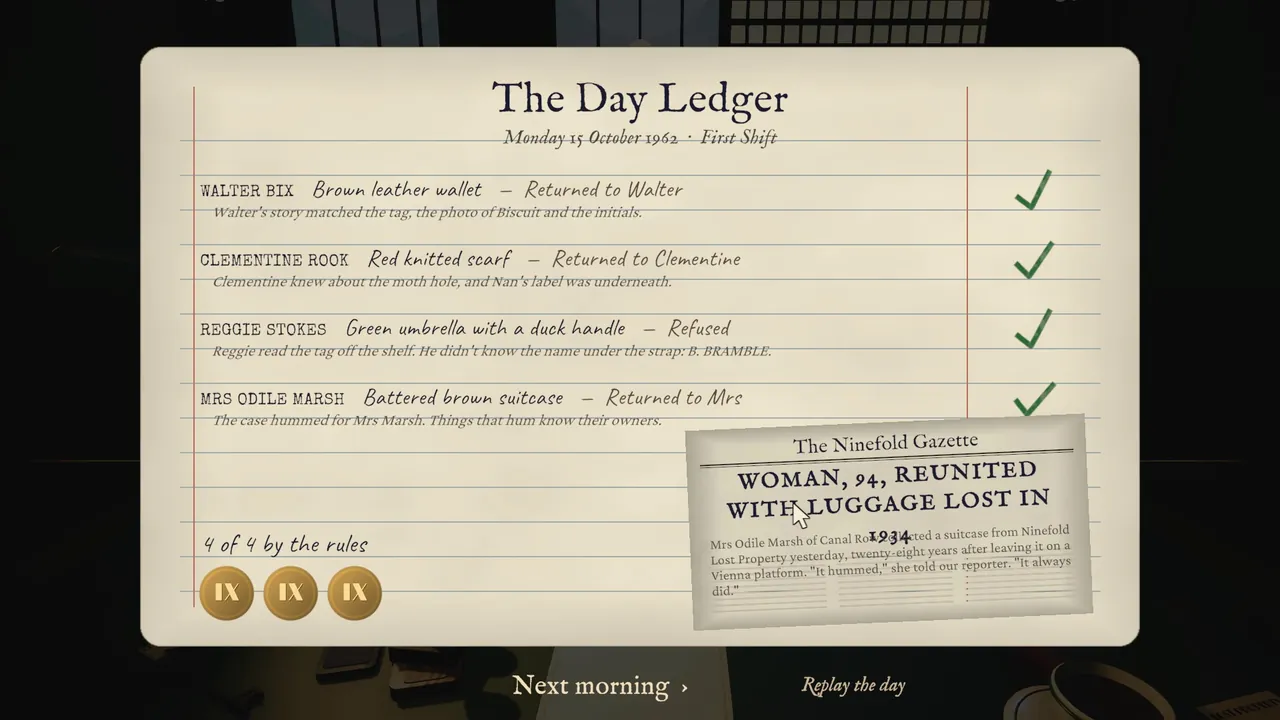
The week runs five days, with 24 cases plus an alternate, 25 objects, 25 sculpted characters, and three endings. Choices carry forward: refused items wait in storage for their real owner, and every gift to the Grey Gentleman visibly drains the colour from the station. A full week takes about an hour.
More screenshots
What it’s built with
Lost & Found runs on Unity 6 with the Universal Render Pipeline. Its main scene is empty. A Boot script builds the whole game at runtime from code and the Resources folder: camera rig, lights, post-processing, desk, props, UI, and the director that runs days and cases. Restarting a day tears everything down and builds it again, which keeps scene wiring from going stale.
All content is JSON: objects, hidden details, hotspots, claims, answers, verdicts, story flags, newspaper headlines, and endings. Blender models line up with that data by name. Hotspots are empties named HS_<detail>, and moving parts are nodes named Lid, Flap, or Key.
A rules solver keeps every case fair. It sees only what a player could learn at the desk by that point in the week and must reach each case’s intended verdict, or the build fails validation. The same solver powers an AutoPilot that plays the entire week through the real desk systems to each ending.
How it was made
This was one of eight games built in parallel from short designer briefs, each by its own AI coding session on a single shared 32-core machine. The brief for this one, in full, was a sentence: run the lost-and-found desk for a train station where some belongings should never be returned. It came with a scope (one desk, 25 objects, a five-day story) and a trailer moment: return a wedding ring, and every photograph on your desk changes. The designer called it their strongest pick. The session wrote a full design and technical plan first, then built the game. The repository’s commit history spans about ten and a half hours on October 4, 2026.
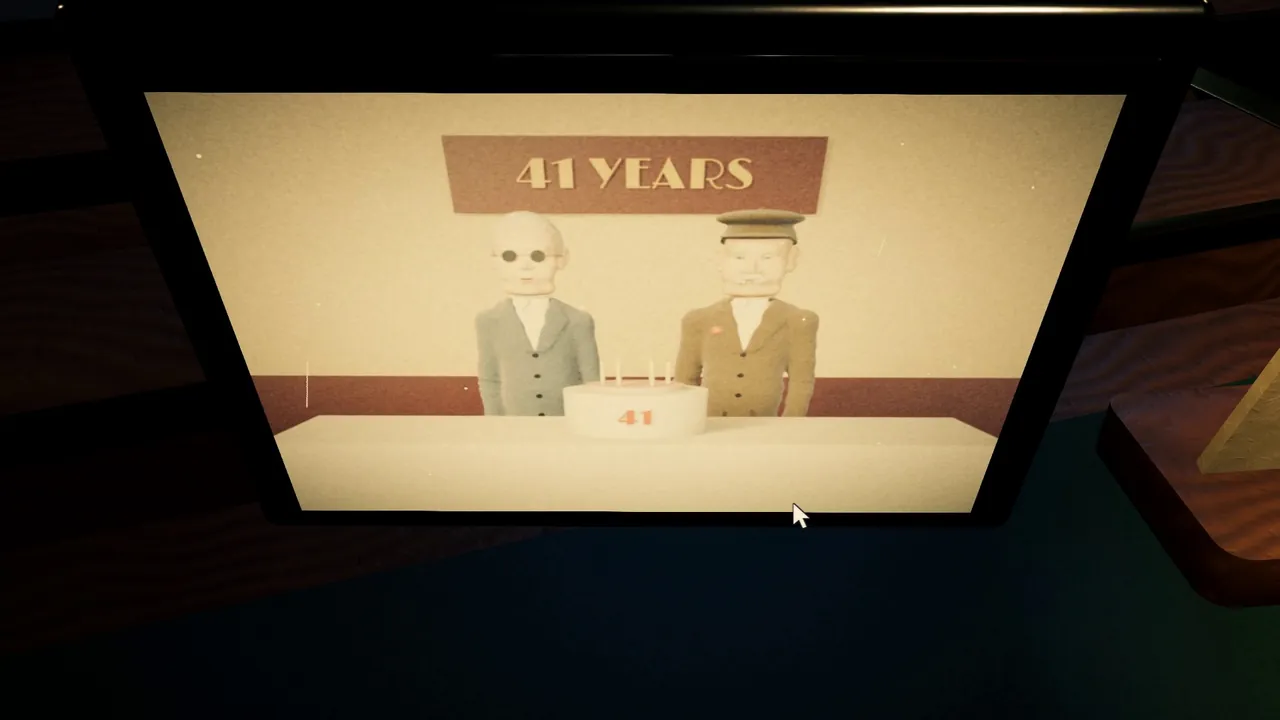
Everything is generated by code in the repository. Characters are sculpted as signed distance fields and meshed with marching cubes, so faces, lips, and ears are one continuous surface. They’re animated procedurally, with breathing, blinking, glances, and talking, rather than rigs. The photographs on the desk are staged with the real character models in Blender, then aged in Python into 1921 sepia, 1951 silver, and 1962 Polaroid. About 170 sound effects, voices, and ambience clips come from a small NumPy synthesis toolkit, along with a swing-jazz score built around a nine-note “Ninefold” motif.
The trailer was shot by the game itself. A frame-locked recorder runs at 30 fps, pipes frames to FFmpeg, and captures the mixed audio, and its play mode drives a simulated mouse and keyboard through whole days. The project was developed with Claude Code.
Play it
Version 0.1.0 includes all five days, every case, and all three endings. Download it from GitHub releases. It’s mouse and keyboard only, and it hasn’t had broad human playtesting yet.
Browse the source on GitHub. GitHub records the repository’s creation on October 4, 2026.